Showing posts with label italians. Show all posts

Thursday, March 19, 2026

About


Finding Italy in California

The first time I realized Italy was in California, I wasn’t in Rome or Florence or Naples.

I was standing on a street corner in San Diego.

It was early evening in Little Italy—the kind of golden hour where the light softens everything. The air carried the smell of garlic and wine. Voices drifted from outdoor patios. Someone laughed in Italian. A church bell rang somewhere in the distance.

For a moment, it didn’t feel like California at all.

It felt like something older.

Something remembered.

And that was the moment everything changed for me.


I didn’t grow up deeply connected to my Italian roots.

Like many Italian American families, mine had, over generations, become something else—more American than Italian. The language faded. Traditions softened. The identity remained, but faint—like an old photograph left too long in the sun.

But the curiosity never left me.

Living in Southern California, surrounded by so many cultures, I began to ask questions:

Who were we before we became this version of ourselves?
Where did we come from—not just geographically, but culturally?
What had been lost… and what still remained?

At first, I thought the answers would be found in books.

I was wrong.

They were in places.


They were in neighborhoods like this one—Little Italies that still breathe with life. In old churches where generations had prayed in the same language. In social halls where immigrants gathered to build community from nothing. In cemeteries where names etched in stone told stories of sacrifice, migration, and hope.

And once I started looking, I began to see it everywhere.

Not just in San Diego.

But across California.


In San Francisco’s North Beach, where the past lingers in cafés and cathedrals.

In San Jose, where a lost Little Italy is being rediscovered.

In Monterey, where Italian fishermen helped define the coastline.

In the Gold Country, where immigrants came not for culture—but for survival.

In the vineyards of the Inland Empire, where Italian pioneers shaped California’s wine industry.

In San Pedro and Los Angeles, where dockworkers and laborers built tight-knit communities along the harbor.

And always—back in San Diego, where the story is still being written.


But this journey didn’t stay personal for long.

It became something more.


Over time, I stopped being just an observer of this history.

I became a part of it.


I have spent years working within the Italian American community in San Diego—not just studying it, but helping sustain it.

I serve as the Facilities Coordinator for Amici House, the cultural and heritage center in Little Italy, where events, traditions, and community life continue to thrive. I sit on the Convivio Society’s Little Italy Heritage Commission, helping preserve and promote the very history this book explores.

I am a member of the House of Italy in Balboa Park. I have served as a leader in the Italian Catholic Federation. I have volunteered with the Little Italy Association and remained deeply involved with Our Lady of the Rosary Church—an Italian national parish that still anchors the community today.

I’ve worked alongside organizations like the Sons and Daughters of Italy and the Italian American Civic Association.

This isn’t secondhand knowledge.

This is lived experience.


At the same time, I bring a professional background in management, operations, and writing—skills that allow me to organize, research, and present this world in a way that is both accessible and meaningful.

I hold a Certificate in Writing for Publication, and through years of research, documentation, and storytelling, I’ve built The Italian Californian into a growing platform dedicated to preserving and sharing this heritage.

This book is an extension of that work.


So if you’re asking:

Why should I read this?
What makes this guide different?

The answer is simple.


This is not written by an outsider.

It’s written by someone inside the community—someone who walks these streets, works with these organizations, and participates in the very culture being described.

This is not just research.

It is relationship.


And that matters.

Because culture is not just something you study.

It’s something you experience.


This book is not just a history.

And it’s not just a travel guide.

It is something in between.


It is a map—not just of places, but of identity.

A guide to what remains, what has been forgotten, and what is being rediscovered. To the Italy immigrants carried with them—and the new identity they built here in California.

Because Italian American identity is not simple.

It is not fully Italian.

It is not just American.

It is something layered. Something evolving. Something deeply tied to memory, place, and community.


As I traveled, researched, and became more involved, this journey stopped being something I observed.

It became something I lived.


Places like Amici House are not just buildings.

They are living symbols of continuity.

Organizations like the Convivio Society, the House of Italy, and the Italian Catholic Federation are not relics of the past.

They are bridges between generations.

And the people—the people are the story.


This guide is for them.

But it is also for you.


It is for the traveler who wants more than destinations—for meaning behind the places they visit.

It is for the Italian American searching for roots.

It is for anyone who has ever wondered how culture survives… how it changes… how it endures.


Because Italy, as I came to learn, is not just a place on a map.

It is something carried.

Something remembered.

Something rebuilt—again and again—in new lands, by new generations.


And here, in California, it found a new home.

Not identical.

Not untouched.

But alive.


So this book is an invitation.

To explore.

To travel.

To rediscover.

To see California not just as a destination—but as a story.

A story written by immigrants, shaped by communities, and carried forward by people who refuse to let it fade.


This is The Italian Californian.

This is where Italy meets the Golden State.


Benvenuti.


Friday, November 1, 2024

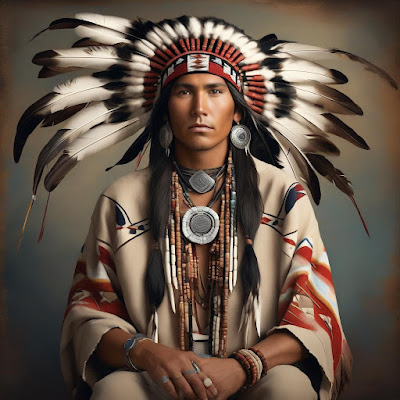
November is National Native American Heritage Month


November is National Native American Heritage Month in the U.S., a time dedicated to honoring the culture, history, struggles, and contributions of the Indigenous peoples of North America. While these communities deserve recognition and respect every day, November serves as a special reminder to focus on their enduring legacy.

In recent decades, tension has arisen between the Italian American community and Native Americans, largely centered around the legacy of Christopher Columbus. Despite Columbus sailing for Spain—where he was known as Cristóbal Colón and even gave his children Spanish names—Italians and Italian Americans continue to regard him as a hero linked to their heritage. In the U.S., many Italian Americans view him as a figure who paved the way for European colonization, the Christianization of the Americas, and the eventual founding of the United States. Some even consider him the first immigrant.


However, Native Americans, who suffered greatly from European colonization, see Columbus as a symbol of their victimization. They view him as a villain responsible not only for atrocities against the Indigenous people he encountered but also for setting in motion centuries of oppression by European settlers.

Efforts by Italian Americans to clarify Columbus’s legacy—arguing that his more negative actions have been exaggerated—have failed to bridge the gap between the two groups. Regardless of whether Columbus is seen as a hero or a villain, the undeniable truth remains: his "discovery" of the Americas opened the door to colonization and the eventual suffering of Native populations. Finding common ground on this complex historical figure remains elusive.

In a global society and a culturally diverse nation like the U.S., The Italian Californian aims to build bridges and foster connections with other ethnic and cultural communities, including Native Americans. While the Columbus debate may never be fully resolved, our hope is to find common ground on shared values and issues that bring us together.

Italians and Native Americans actually share much in common, though these similarities have often been overshadowed by the Columbus controversy. Like the Americas, Italy has been repeatedly conquered and colonized by foreign powers throughout history. Italians, particularly in the South and Sicily, are well aware of the hardships brought by conquest and oppression. In the U.S., Italian immigrants faced significant prejudice and discrimination in the early 20th century.

Despite these parallels, the fact that most Italian Americans have successfully integrated into mainstream American society has caused our struggles as a minority to fade from memory, even within our own community. The Columbus issue has only deepened the divide between us and other groups that have endured prejudice and conquest, such as Native Americans.

This e-magazine holds no illusion that we will resolve the Columbus controversy. Instead, we aim to focus on the common ground we share with our Native American brothers and sisters. Even today, Native Americans face significant hardships, particularly on certain reservations, where poverty and other challenges persist. While we cannot undo the suffering they have endured, we can extend an olive branch by first recognizing and understanding their ongoing struggles, and second, by contributing in any small way we can to address these contemporary issues.

You can learn more about contemporary Native American issues through this Google search link here:native american issues today - Search (bing.com) and here: Microsoft Copilot in Bing

Throughout American history, Italians have stood up for minority groups, including Native Americans. A shining example is Father Eusebio Kino, an Italian Jesuit priest who worked in what is now Mexico and the American Southwest during the late 17th and early 18th centuries. Under the Spanish flag, Fr. Kino was a strong advocate for Indigenous rights, defending Native peoples from the abuses of Spanish soldiers and resisting their forced labor in Spanish mines.


Fr. Kino's dedication to protecting Native communities was extraordinary. He not only introduced Catholicism but also fought for the dignity and well-being of the Indigenous people he served. Historian Herbert Bolton described Kino as "the most distinguished pioneer and missionary on the northern frontier of New Spain," noting that Kino “never lost sight of the fact that his first duty was to protect the Indians from exploitation.”

Father Eusebio Kino’s legacy is honored with statues in several key locations across the U.S., Mexico, and Italy, recognizing his advocacy for Native Americans and his missionary work. In the United States, one of the most prominent statues is located in the U.S. Capitol’s National Statuary Hall in Washington, D.C., where Kino represents the state of Arizona. There are also statues of Kino in Tucson, Arizona, and at Kino Park in Nogales, Arizona.


In Mexico, his memory is preserved with statues in various locations, including Hermosillo and Magdalena de Kino in the state of Sonora, where his remains were discovered. These statues commemorate his extensive missionary work and his contributions to the local Indigenous communities.

In Italy, his birthplace of Segno, located in the Trentino region, proudly honors him with a statue, celebrating his Italian heritage and his humanitarian contributions across the world.

These statues stand as lasting tributes to Father Kino's enduring legacy as a defender of Native rights and a pioneer who bridged cultures.

Father Kino is perhaps the most notable, but certainly not the only example of Italians who have stood up for Native Americans and other marginalized groups. These advocates deserve recognition and should not be overlooked or forgotten due to the controversy surrounding Columbus.

You can learn more about Kino here:

Saturday, September 21, 2024

San Diego's Italian Church Holds Annual Festa & Blessing of the Fishing Fleet October 6th, 2024


Our Lady of the Rosary Catholic Church, an Italian National Parish in San Diego will hold its "Marian" or "Our Lady of the Rosary Festa." There is a special Mass where all parish societies and groups carry their banners in the opening procession. In years past the Bishop of the Diocese of San Diego, now a Cardinal, has celebrated the Mass. After Mass they, along with the public who are welcomed to join, process or parade through the streets of the Little Italy neighborhood down to the harbor. There, along the Embarcadero, a boat is blessed, and fireworks are set off. The procession then parades back to the church where there is a benediction and doves are set free signifying peace. Afterwards there is a complimentary luncheon in the Parish Hall.


Our Lady of the Rosary Festa commemorates the October 7th victory of the combined Christian European fleets of the Holy League of 1571 over the Ottoman navy at the Battle of Lepanto and was originally called the "Feast of Our Lady of Victory."

Below are photos from past Festas. 

What: Feast of Our Lady of the Rosary
Where: Our Lady of the Rosary Catholic Church
1668 State Street San Diego, CA 92101
(619)234-4820
When: Sunday, October 6th, 2024
11:00 am Rosary
12:00 Mass
1:30 Procession

Past Festas:


Monday, November 13, 2023

Recap: NIAF United Nations Welcome Reception


THE NATIONAL ITALIAN AMERICAN FOUNDATION
RECAP
image
NIAF among the first Italian American organizations to be recognized as a non-governmental organization (NGO) with Special Consultative Status by the United Nations' Economic and Social Council (ECOSOC)!
To commemorate this momentous occasion, on the evening of November 1st, the Permanent Mission of Italy to the United Nations welcomed a delegation of NIAF's Board of Directors for a reception at the United Nations Headquarters in New York. Foundation leadership was joined by several notable diplomats from the General Assembly of the United Nations, Permanent Mission of Italy to the United Nations, Permanent Mission of the United States of America to the United Nations, and the President of the United Nations' Economic and Social Council (ECOSOC).

🎥 NIAF Welcome Reception at the UN Recap Video: Click the link below to watch the recap video!
 
WATCH THE RECAP
 
BECOME
A MEMBER
 
DONATE
 

Saturday, November 4, 2023

Thanksgiving "Italian American Style"


Thanksgiving is coming up soon this year for us Americans and being a quintessential and distinctive American holiday, I’m sure many of us want to keep it as traditional as possible. That is with the traditional foods: turkey and stuffing, yams, mashed potatoes, corn (on or off the cob), and desserts like Pumpkin Pie. But as a free and diverse nation we sometimes mix it up a bit and add bits of our ancestral culture to make our celebration our own and unique. In my own family we would have a zucchini casserole, and along with the Turkey, as a main dish some sort of pasta, usually Manicotti or Stuffed Shells. Lasagna and meatballs was and still remains the main course on Christmas for us. For dessert, along with American favorites like Pumpkin and Apple pie, we’d have cannoli, biscotti, and some sort of Italian cookies.


Before I go on let me explain briefly the story of Thanksgiving, for those who don’t know. Traditionally we were taught that it was a meal shared between the Pilgrims and Native Americans in the new Plymouth colony back in the 1600s to celebrate and thank the Natives for helping the Pilgrims learn to survive in their new environment. The “Pilgrims” were British Puritans looking for a new land to freely practice their religion and eventually landed in what is now Massachusetts. This meal is said to have occurred around the first Harvest time in November. It was made an official holiday by President Abraham Lincoln on October 3rd, 1863 in honor of the ending of the Civil War.


Traditionally, Americans would use it as an opportunity to gather with family to share a large meal, celebrate and give thanks for…well….anything. It’s just a time to remind us to appreciate what we have in life, especially our families.


In addition to food, adding a few Italian dishes to the American table, for entertainment in the background my family, our gatherings usually organized by older members, would have old Italian American favorites singing. Names like Dean Martin, Frank Sinatra, and so on. Yet another distinctive Italian American trait of our very American Thanksgiving and other family gatherings is “The Italian Goodbye.” At the end, when each of our usual 50 or 60 guests go to leave, each one has to say goodbye to each individual personally and inevitably get into a long conversation with each one. Consequently it takes at least an hour for each guest to go from saying the first “Goodbye” to actually getting out the door. To say nothing of getting into their cars and finally driving away!


But I digress…for ideas on how to have a Thanksgiving “Italian American style” click on this Google search link and feel free to comment here on what, if anything, your family does to make Thanksgiving Italian.


Have a Happy Thanksgiving! Auguri!

Heart’s Delight – An Orchard Story: Remembering the Italian Orchards of Santa Clara Valley

Heart’s Delight – An Orchard Story: Remembering the Italian Orchards of Santa Clara Valley Before it was known around the world as Silicon V...