Friday, November 1, 2024

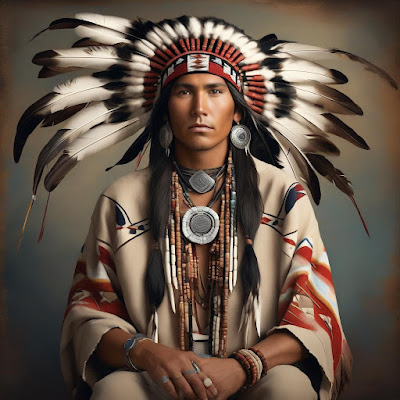
November is National Native American Heritage Month


November is National Native American Heritage Month in the U.S., a time dedicated to honoring the culture, history, struggles, and contributions of the Indigenous peoples of North America. While these communities deserve recognition and respect every day, November serves as a special reminder to focus on their enduring legacy.

In recent decades, tension has arisen between the Italian American community and Native Americans, largely centered around the legacy of Christopher Columbus. Despite Columbus sailing for Spain—where he was known as Cristóbal Colón and even gave his children Spanish names—Italians and Italian Americans continue to regard him as a hero linked to their heritage. In the U.S., many Italian Americans view him as a figure who paved the way for European colonization, the Christianization of the Americas, and the eventual founding of the United States. Some even consider him the first immigrant.


However, Native Americans, who suffered greatly from European colonization, see Columbus as a symbol of their victimization. They view him as a villain responsible not only for atrocities against the Indigenous people he encountered but also for setting in motion centuries of oppression by European settlers.

Efforts by Italian Americans to clarify Columbus’s legacy—arguing that his more negative actions have been exaggerated—have failed to bridge the gap between the two groups. Regardless of whether Columbus is seen as a hero or a villain, the undeniable truth remains: his "discovery" of the Americas opened the door to colonization and the eventual suffering of Native populations. Finding common ground on this complex historical figure remains elusive.

In a global society and a culturally diverse nation like the U.S., The Italian Californian aims to build bridges and foster connections with other ethnic and cultural communities, including Native Americans. While the Columbus debate may never be fully resolved, our hope is to find common ground on shared values and issues that bring us together.

Italians and Native Americans actually share much in common, though these similarities have often been overshadowed by the Columbus controversy. Like the Americas, Italy has been repeatedly conquered and colonized by foreign powers throughout history. Italians, particularly in the South and Sicily, are well aware of the hardships brought by conquest and oppression. In the U.S., Italian immigrants faced significant prejudice and discrimination in the early 20th century.

Despite these parallels, the fact that most Italian Americans have successfully integrated into mainstream American society has caused our struggles as a minority to fade from memory, even within our own community. The Columbus issue has only deepened the divide between us and other groups that have endured prejudice and conquest, such as Native Americans.

This e-magazine holds no illusion that we will resolve the Columbus controversy. Instead, we aim to focus on the common ground we share with our Native American brothers and sisters. Even today, Native Americans face significant hardships, particularly on certain reservations, where poverty and other challenges persist. While we cannot undo the suffering they have endured, we can extend an olive branch by first recognizing and understanding their ongoing struggles, and second, by contributing in any small way we can to address these contemporary issues.

You can learn more about contemporary Native American issues through this Google search link here:native american issues today - Search (bing.com) and here: Microsoft Copilot in Bing

Throughout American history, Italians have stood up for minority groups, including Native Americans. A shining example is Father Eusebio Kino, an Italian Jesuit priest who worked in what is now Mexico and the American Southwest during the late 17th and early 18th centuries. Under the Spanish flag, Fr. Kino was a strong advocate for Indigenous rights, defending Native peoples from the abuses of Spanish soldiers and resisting their forced labor in Spanish mines.


Fr. Kino's dedication to protecting Native communities was extraordinary. He not only introduced Catholicism but also fought for the dignity and well-being of the Indigenous people he served. Historian Herbert Bolton described Kino as "the most distinguished pioneer and missionary on the northern frontier of New Spain," noting that Kino “never lost sight of the fact that his first duty was to protect the Indians from exploitation.”

Father Eusebio Kino’s legacy is honored with statues in several key locations across the U.S., Mexico, and Italy, recognizing his advocacy for Native Americans and his missionary work. In the United States, one of the most prominent statues is located in the U.S. Capitol’s National Statuary Hall in Washington, D.C., where Kino represents the state of Arizona. There are also statues of Kino in Tucson, Arizona, and at Kino Park in Nogales, Arizona.


In Mexico, his memory is preserved with statues in various locations, including Hermosillo and Magdalena de Kino in the state of Sonora, where his remains were discovered. These statues commemorate his extensive missionary work and his contributions to the local Indigenous communities.

In Italy, his birthplace of Segno, located in the Trentino region, proudly honors him with a statue, celebrating his Italian heritage and his humanitarian contributions across the world.

These statues stand as lasting tributes to Father Kino's enduring legacy as a defender of Native rights and a pioneer who bridged cultures.

Father Kino is perhaps the most notable, but certainly not the only example of Italians who have stood up for Native Americans and other marginalized groups. These advocates deserve recognition and should not be overlooked or forgotten due to the controversy surrounding Columbus.

You can learn more about Kino here:

Saturday, September 21, 2024

San Diego's Italian Church Holds Annual Festa & Blessing of the Fishing Fleet October 6th, 2024


Our Lady of the Rosary Catholic Church, an Italian National Parish in San Diego will hold its "Marian" or "Our Lady of the Rosary Festa." There is a special Mass where all parish societies and groups carry their banners in the opening procession. In years past the Bishop of the Diocese of San Diego, now a Cardinal, has celebrated the Mass. After Mass they, along with the public who are welcomed to join, process or parade through the streets of the Little Italy neighborhood down to the harbor. There, along the Embarcadero, a boat is blessed, and fireworks are set off. The procession then parades back to the church where there is a benediction and doves are set free signifying peace. Afterwards there is a complimentary luncheon in the Parish Hall.


Our Lady of the Rosary Festa commemorates the October 7th victory of the combined Christian European fleets of the Holy League of 1571 over the Ottoman navy at the Battle of Lepanto and was originally called the "Feast of Our Lady of Victory."

Below are photos from past Festas. 

What: Feast of Our Lady of the Rosary
Where: Our Lady of the Rosary Catholic Church
1668 State Street San Diego, CA 92101
(619)234-4820
When: Sunday, October 6th, 2024
11:00 am Rosary
12:00 Mass
1:30 Procession

Past Festas:


Sunday, September 15, 2024

Little Italy San Diego State of the Neighborhood 2024


Get ready for a night of fun and community spirit at the Little Italy State of the Neighborhood event on Thursday, September 26th!  This year, the event is taking it to the next level with a fabulous gathering on the rooftop lanai of Kilroy's premier office building, 2100 Kettner.  Doors will open at 5:30pm.


Marco Li Mandri, Chief Executive Administrator of the Little Italy Association, will guide attendees through the rich history, exciting current happenings, and future projects of Little Italy.  This is a fantastic opportunity for neighbors, business owners, residents, visitors, and other community members to mingle while enjoying mouthwatering food and wine donated by local Little Italy businesses.


Attendees will receive a delicious meal, dessert, and a beverage or glass of wine.  Additional drinks will be available for purchase.


Guests are encouraged to arrive early for cocktail hour, grab a seat, eat, drink, and socialize. The presentation will kick-off promptly at 7:15pm. Don’t miss this special evening celebrating the heart and soul of Little Italy San Diego!


PRICE

VIP Admission $60*

Reserved premier indoor seat with a view for dinner and presentation, one (1) entrée plate and dessert, donated by Little Italy businesses, and one (1) beverage/beer/glass of wine.


General Admission $50* 

"First come, first served" seating for dinner and presentation, one (1) entrée and a dessert, donated by Little Italy businesses, and one (1) beverage/beer/glass of wine.


*Service fee will apply.

Four tickets and more information click here.

Sunday, September 1, 2024

I am not Italian


am not an Italian. I am a proud, patriotic American. I was born and raised in the United States, I look at the world from an American perspective, and I am a product of American culture, in particular its pop culture. Admittedly, my lifestyle, my belief system, both politically and religiously, my taste in movies, TV shows, music, food, clothes, and so on... were all shaped by American mass culture, that is pop culture, than any customs and traditions my parents and grandparents had. Sure, we ate pasta on the Holidays along with traditional "American" foods (see my articles "Thanksgiving, Italian-American Style" and "Ideas On How To Celebrate An Italian American Christmas" here), sure, my older relatives would speak a foreign language when they didn't want me and my siblings to know what they were talking about, -in this case the language was Italian, - and yes, our last names ended in vowels as compared to my "fellow" White American classmates who had names like Smith, Brown, and Johnson. We had our own religious traditions too, but they weren't really anything ethnic, just Catholic customs that most other Catholics shared. So why is the focus of this website specifically Italian history and culture in California? Why do I even care about it?


Though I came from a thoroughly de-raciated, very stereotypical assimilated White American background with few vestiges of Italian culture, I attended culturally and racially diverse schools. In these schools both on the playground and in a classroom setting as part of a study course, I was forced to reckon with my racial and cultural background. Not satisfied with just being "White," and therefore no different from the Smiths and Johnsons, when I finally recognized my family's Italian background, no matter how faded it now was, I not only became proud of it, but I wanted to know more about it.... 


Being forced to think about my family's history and race got me researching both. I always knew we were of Italian descent, but I never recognized the significance of that, and it was never a major part of my everyday life. I was only around anything that could be called "Italian" when I was around my grandparents, and even that wasn't a lot. Everything else about Italians I only knew from Hollywood, and Hollywood hasn't always been kind to us. As I learned about the history of Italian immigrants in the United States in general, living in California as I was, I started focusing more on that region of the country regarding them, and after doing so, I became very angry.


Angry because I was cheated! So much rich history, fascinating stories and customs, that wasn't taught in schools. The largest mass lynching in American history wasn't in my school text books, for example. And everything we were told about Italians- the Roman Empire, the Italian renaissance, so on... I looked at as an outsider... I never knew that we were learning about my very own ancestors. Unlike my black, Hispanic and Asian friends who have whole chapters dedicated to their heritages in America and can identify with the characters in those chapters by the very fact that they are identified as Hispanic, Black and Asian. But no one ever called me "Italian" or "Italian American." Why is an American with black skin called "African American" even though they were never in Africa and may know nothing about African culture? But when I call myself "Italian American" or "European American" I get laughed at?


But I digress.... the point is I fell in love with my family's Italian history and customs, even if we don't practice them much if at all anymore, and dedicated my life to preserving, celebrating, and promoting them. I no longer call myself "Italian," or "Italian-American," or even "American-Italian." Because my everyday lifestyle does not reflect anything "Italian," but was formed and created by American pop culture. I AM AN AMERICAN. Who has a love for history and culture, for learning about other nations and cultures, so why not start with the nation and culture of my ancestors, Italy? I am an American.... of Italian descent thanks to my ancestors, and an American who loves all things Italian (but second to my love of America.) And this website and blog focuses on Italians in California because I happen to live in that American state.


Editorial: A Setback, Not a Separation: Why the U.S.–Italy Friendship Still Matters

  Editorial: A Setback, Not a Separation: Why the U.S.–Italy Friendship Still Matters By Chris M. Forte The Italian Californian The recent p...