Our Lady of the Rosary Catholic Church, an Italian National Parish in San Diego will hold its "Marian" or "Our Lady of the Rosary Festa." There is a special Mass where all parish societies and groups carry their banners in the opening procession. In years past the Bishop of the Diocese of San Diego, now a Cardinal, has celebrated the Mass. After Mass they, along with the public who are welcomed to join, process or parade through the streets of the Little Italy neighborhood down to the harbor. There, along the Embarcadero, a boat is blessed, and fireworks are set off. The procession then parades back to the church where there is a benediction and doves are set free signifying peace. Afterwards there is a complimentary luncheon in the Parish Hall.
Our Lady of the Rosary Festa commemorates the October 7th victory of the combined Christian European fleets of the Holy League of 1571 over the Ottoman navy at the Battle of Lepanto and was originally called the "Feast of Our Lady of Victory."
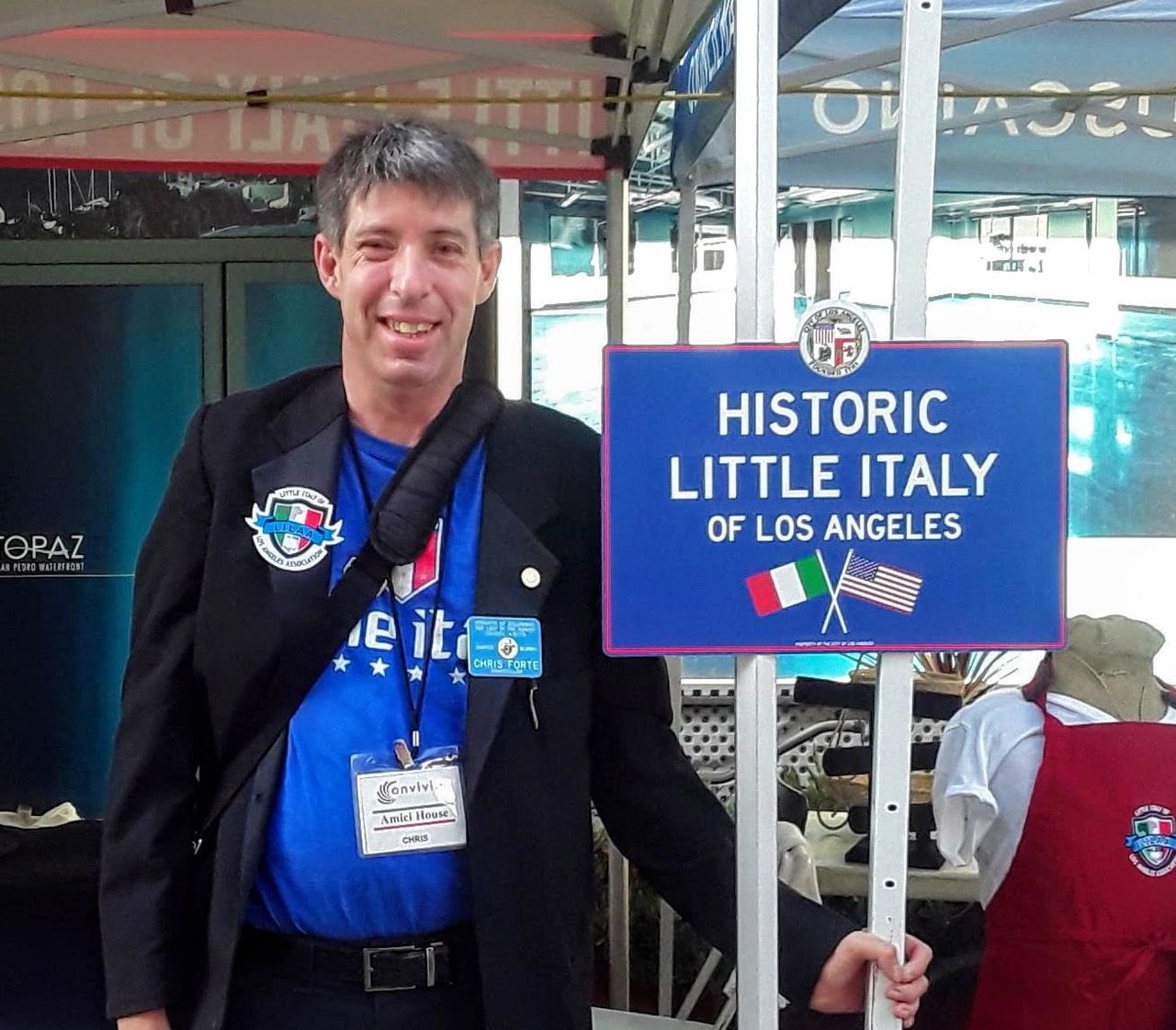
Get ready for a night of fun and community spirit at the Little Italy State of the Neighborhood event on Thursday, September 26th! This year, the event is taking it to the next level with a fabulous gathering on the rooftop lanai of Kilroy's premier office building, 2100 Kettner. Doors will open at 5:30pm.
Marco Li Mandri, Chief Executive Administrator of the Little Italy Association, will guide attendees through the rich history, exciting current happenings, and future projects of Little Italy. This is a fantastic opportunity for neighbors, business owners, residents, visitors, and other community members to mingle while enjoying mouthwatering food and wine donated by local Little Italy businesses.
Attendees will receive a delicious meal, dessert, and a beverage or glass of wine. Additional drinks will be available for purchase.
Guests are encouraged to arrive early for cocktail hour, grab a seat, eat, drink, and socialize. The presentation will kick-off promptly at 7:15pm. Don’t miss this special evening celebrating the heart and soul of Little Italy San Diego!
PRICE
VIP Admission $60*
Reserved premier indoor seat with a view for dinner and presentation, one (1) entrée plate and dessert, donated by Little Italy businesses, and one (1) beverage/beer/glass of wine.
General Admission $50*
"First come, first served" seating for dinner and presentation, one (1) entrée and a dessert, donated by Little Italy businesses, and one (1) beverage/beer/glass of wine.
I am not an Italian. I am a proud, patriotic American. I was born and raised in the United States, I look at the world from an American perspective, and I am a product of American culture, in particular its pop culture. Admittedly, my lifestyle, my belief system, both politically and religiously, my taste in movies, TV shows, music, food, clothes, and so on... were all shaped by American mass culture, that is pop culture, than any customs and traditions my parents and grandparents had. Sure, we ate pasta on the Holidays along with traditional "American" foods (see my articles "Thanksgiving, Italian-American Style" and "Ideas On How To Celebrate An Italian American Christmas" here), sure, my older relatives would speak a foreign language when they didn't want me and my siblings to know what they were talking about, -in this case the language was Italian, - and yes, our last names ended in vowels as compared to my "fellow" White American classmates who had names like Smith, Brown, and Johnson. We had our own religious traditions too, but they weren't really anything ethnic, just Catholic customs that most other Catholics shared. So why is the focus of this website specifically Italian history and culture in California? Why do I even care about it?
Though I came from a thoroughly de-raciated, very stereotypical assimilated White American background with few vestiges of Italian culture, I attended culturally and racially diverse schools. In these schools both on the playground and in a classroom setting as part of a study course, I was forced to reckon with my racial and cultural background. Not satisfied with just being "White," and therefore no different from the Smiths and Johnsons, when I finally recognized my family's Italian background, no matter how faded it now was, I not only became proud of it, but I wanted to know more about it....
Being forced to think about my family's history and race got me researching both. I always knew we were of Italian descent, but I never recognized the significance of that, and it was never a major part of my everyday life. I was only around anything that could be called "Italian" when I was around my grandparents, and even that wasn't a lot. Everything else about Italians I only knew from Hollywood, and Hollywood hasn't always been kind to us. As I learned about the history of Italian immigrants in the United States in general, living in California as I was, I started focusing more on that region of the country regarding them, and after doing so, I became very angry.
Angry because I was cheated! So much rich history, fascinating stories and customs, that wasn't taught in schools. The largest mass lynching in American history wasn't in my school text books, for example. And everything we were told about Italians- the Roman Empire, the Italian renaissance, so on... I looked at as an outsider... I never knew that we were learning about my very own ancestors. Unlike my black, Hispanic and Asian friends who have whole chapters dedicated to their heritages in America and can identify with the characters in those chapters by the very fact that they are identified as Hispanic, Black and Asian. But no one ever called me "Italian" or "Italian American." Why is an American with black skin called "African American" even though they were never in Africa and may know nothing about African culture? But when I call myself "Italian American" or "European American" I get laughed at?
But I digress.... the point is I fell in love with my family's Italian history and customs, even if we don't practice them much if at all anymore, and dedicated my life to preserving, celebrating, and promoting them. I no longer call myself "Italian," or "Italian-American," or even "American-Italian." Because my everyday lifestyle does not reflect anything "Italian," but was formed and created by American pop culture.I AM AN AMERICAN. Who has a love for history and culture, for learning about other nations and cultures, so why not start with the nation and culture of my ancestors, Italy? I am an American.... of Italian descent thanks to my ancestors, and an American who loves all things Italian (but second to my love of America.) And this website and blog focuses on Italians in California because I happen to live in that American state.
NIAF among the first Italian American organizations to be recognized as a non-governmental organization (NGO) with Special Consultative Status by the United Nations' Economic and Social Council (ECOSOC)!
To commemorate this momentous occasion, on the evening of November 1st, the Permanent Mission of Italy to the United Nations welcomed a delegation of NIAF's Board of Directors for a reception at the United Nations Headquarters in New York. Foundation leadership was joined by several notable diplomats from the General Assembly of the United Nations, Permanent Mission of Italy to the United Nations, Permanent Mission of the United States of America to the United Nations, and the President of the United Nations' Economic and Social Council (ECOSOC).
NIAF Welcome Reception at the UN Recap Video: Click the link below to watch the recap video!
They are here! Click here to download your picture with Santa, for FREE, from the 2022 Little Italy Tree Lighting & Christmas Village.
SATURDAY, DECEMBER 2, 2023 FROM 4:00PM TO 8:00PM
Ho Ho Ho… Can you hear those jingle bells? This year SANTA IS BACK for our annual Little Italy Tree Lighting and Christmas Village on Saturday, December 3rd from 4:00pm-8:00pm!
Transforming into a winter wonderland with Christmas twinkle lights down all the streets, our beautiful urban neighborhood will be adorned with 10-foot tall nutcrackers and kinetic tree holiday displays on street corners, Christmas songs and more. Family, friends, and neighbors are invited to come together to experience true holiday joy at this family-friendly event and enjoy the neighborhood’s festive décor—including two Christmas trees, Joshua Hubert’s Aurora tree at Piazza Basilone and the permanent 25-foot tree at Piazza della Famiglia, seasonal vendors, live music and entertainment, holiday treats, a traditional Italian tree lighting ceremony, and this year SANTA IS BACK to grant everyone’s Christmas wishes!
Thanksgiving is coming up soon this year for us Americans and being a quintessential and distinctive American holiday, I’m sure many of us want to keep it as traditional as possible. That is with the traditional foods: turkey and stuffing, yams, mashed potatoes, corn (on or off the cob), and desserts like Pumpkin Pie. But as a free and diverse nation we sometimes mix it up a bit and add bits of our ancestral culture to make our celebration our own and unique. In my own family we would have a zucchini casserole, and along with the Turkey, as a main dish some sort of pasta, usually Manicotti or Stuffed Shells. Lasagna and meatballs was and still remains the main course on Christmas for us. For dessert, along with American favorites like Pumpkin and Apple pie, we’d have cannoli, biscotti, and some sort of Italian cookies.
Before I go on let me explain briefly the story of Thanksgiving, for those who don’t know. Traditionally we were taught that it was a meal shared between the Pilgrims and Native Americans in the new Plymouth colony back in the 1600s to celebrate and thank the Natives for helping the Pilgrims learn to survive in their new environment. The “Pilgrims” were British Puritans looking for a new land to freely practice their religion and eventually landed in what is now Massachusetts. This meal is said to have occurred around the first Harvest time in November. It was made an official holiday by President Abraham Lincoln on October 3rd, 1863 in honor of the ending of the Civil War.
Traditionally, Americans would use it as an opportunity to gather with family to share a large meal, celebrate and give thanks for…well….anything. It’s just a time to remind us to appreciate what we have in life, especially our families.
In addition to food, adding a few Italian dishes to the American table, for entertainment in the background my family, our gatherings usually organized by older members, would have old Italian American favorites singing. Names like Dean Martin, Frank Sinatra, and so on.
Yet another distinctive Italian American trait of our very American Thanksgiving and other family gatherings is “The Italian Goodbye.” At the end, when each of our usual 50 or 60 guests go to leave, each one has to say goodbye to each individual personally and inevitably get into a long conversation with each one. Consequently it takes at least an hour for each guest to go from saying the first “Goodbye” to actually getting out the door. To say nothing of getting into their cars and finally driving away!
But I digress…for ideas on how to have a Thanksgiving “Italian American style” click onthis Google search linkand feel free to comment here on what, if anything, your family does to make Thanksgiving Italian.


.jpg)
.jpg)



 NIAF Welcome Reception at the UN Recap Video: Click the link below to watch the recap video!


.jpg)
